
Blog · For parents
Private Wrestling Lessons or Club Practice? How to Make Them Work Together
What families should ask before adding private wrestling lessons in San Diego, and how individual coaching can complement club or school practice.
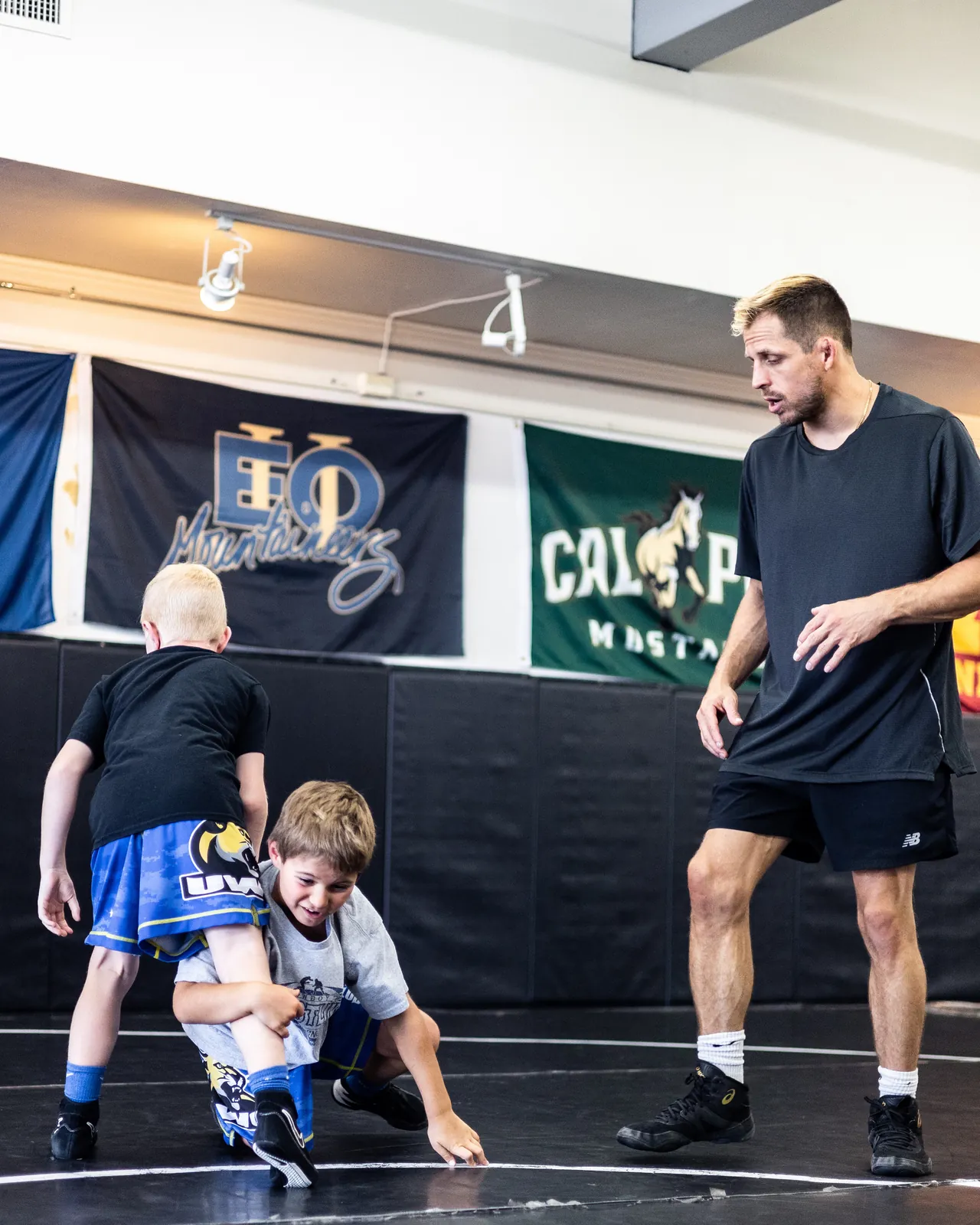
When an athlete wants to improve, adding more training can feel like the obvious answer. But the better question is what kind of attention is missing. Club practice and private wrestling lessons are different tools. One offers the rhythm and partners of a room; the other can make space for a closer look at a particular athlete. A useful plan gives each a clear job.
What the wrestling room provides
Regular club or school practice lets athletes work with different partners, follow a shared schedule and respond to live reactions. A technique that feels comfortable with one partner may become difficult against a different stance, pace or style. That variety is part of learning to wrestle, not a distraction from it.
There is also a team context. Athletes learn to listen, rotate, ask for help and keep working when a session is not built entirely around them. Private attention cannot reproduce every benefit of a full room. Before changing the schedule, understand what is already working in the athlete’s current program.
What individual attention can add
A private lesson can slow down a recurring position and give the coach more time to observe one athlete. That might mean checking movement before adding another finish, looking at why a setup keeps failing or clarifying a detail that got lost in a group explanation. The value is focus, not simply a claim that private training is more advanced. Coach Lara brings that work from a coaching record that includes three World Team members, two World medals and 13 athletes sent to Division I universities.
Mat Sense’s private-training page describes an initial assessment of movement patterns, positional strength and technical proficiency. Lessons are listed as 60 minutes, Sunday through Friday, with extra time available by arrangement. The actual plan and appointment should be confirmed with Coach Lara, not assumed from those general details.
Give the lesson a specific purpose
Before booking, ask the athlete what they want help understanding. “I want to get better” is a starting point, but “I get to a leg and cannot finish” gives a coach more to work with. Match footage, a description from the team coach or a repeated practice problem can help define that starting point without dictating the solution.
A beginner may have a different purpose: becoming comfortable with a stance, learning how a session works or getting individual feedback on basic movement. The right question is not whether the athlete is already accomplished enough to deserve a lesson. It is whether the coach can provide a suitable, safe format for that athlete’s experience and readiness.
Coordinate rather than collect instructions
Different coaches sometimes use different terms for similar actions. Tell a private coach what the athlete is learning in the main room, and ask how new feedback fits. A short description of the current schedule, competition dates and priorities is more useful than arriving with an expectation that every existing habit needs to be replaced.
After the lesson, the athlete should be able to explain the main focus in plain language. If they cannot, ask for clarification before adding more information. The goal is an idea that travels back to practice, where the athlete can repeat it with appropriate partners and coaching supervision.
More is not automatically more useful
A full calendar can leave very little space to absorb feedback. Consider school demands, travel and the athlete’s willingness to train before adding another session. Avoid treating private lessons as a punishment for a loss or a way to make up for every difficult tournament. The athlete needs a purpose they understand, not just another appointment.
For questions about injury, pain or return to training, involve a qualified healthcare professional. This article is not a medical readiness assessment. Tell the coach about relevant restrictions before scheduling so the session can be discussed realistically, rather than trying to work around a problem without the right guidance.
Ask practical questions before committing
Confirm the venue, price, partner arrangements and what to bring. Jason Lara is now based in San Diego, and the lesson venue is confirmed when you schedule. Ask whether the session will be one-on-one, with a suitable partner or in another agreed format. A clear arrangement prevents surprises for both families and coaches.
Ask what happens after the first assessment, too. Does the athlete leave with one priority for team practice? Would match analysis help identify it? How should you decide when to follow up? Do not expect a guaranteed result or a fixed number of lessons to produce one. Individual response and practice opportunities differ.
Choose the tool that matches the need
If the need is focused individual feedback, start with Request a Lesson. If a coach wants a shared structure for an entire room, look at Coach+, the Mat Sense curriculum subscription. If the athlete wants a concentrated international training experience, read the Georgia camp details and ask about suitability.
Those paths are not interchangeable. A curriculum is not an individual assessment, and a camp is not an ordinary weekly schedule. Start with the athlete’s actual question, preserve what their regular room does well and use extra coaching to make that work more deliberate. The best addition is the one everyone can explain.